




(with Methodological References)
By James C. Goodall
January 25, 2026
Study Population and Response Rate
The survey was administered to the complete eligible population of 81 association members. A total of 41 responses were received, corresponding to a 50.6% response rate. Response rates in this range are consistent with voluntary surveys conducted in community and organizational contexts and are considered sufficient for descriptive analysis when sampling is transparent and results are reported without suppression (AAPOR, 2016; Groves et al., 2009).
Instrument and Measurement
The survey employed a single-item measure to assess respondent sentiment regarding gate security. Response categories were structured to capture positive, neutral, and negative sentiment. The inclusion of a neutral response option aligns with established best practices in attitudinal survey design, which recommend balanced and symmetrical response scales to reduce measurement error and forced-choice bias (Dillman, Smyth, & Christian, 2014).
Descriptive Results
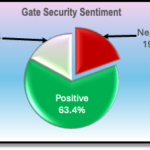
Among respondents (n = 41), 63.4% (n = 26) reported positive sentiment, 19.5% (n = 8) reported negative sentiment, and 17.1% (n = 7) reported neutral sentiment. All response categories were reported without aggregation, weighting, or exclusion, consistent with transparency standards for survey reporting (AAPOR, 2016).
Statistical Considerations
Because the survey sampled a substantial proportion of a finite population, estimates of respondent sentiment benefit from a finite population correction. At the 95% confidence level, the estimated proportion of positive sentiment among respondents is associated with an approximate margin of error of ±10 percentage points. This level of precision indicates that positive sentiment remains the modal response under conservative assumptions regarding sampling variability (Lohr, 2010).
Scope and Limitations
The survey was designed to provide a descriptive assessment of sentiment among participating members. Participation was voluntary and the sample was not randomly selected; therefore, the findings should not be interpreted as inferential estimates of sentiment among non-respondents. This limitation is characteristic of self-administered surveys and does not invalidate descriptive findings when properly disclosed (Groves et al., 2009; Dillman et al., 2014). No hypothesis testing or causal inference was attempted, and statistical significance testing (e.g., p-values) was not applicable to the study design.
Interpretation The results constitute a transparent and internally consistent description of respondent sentiment. Within the responding sample, positive sentiment toward gate security was predominant. Consistent with established survey-methodology standards, the findings are appropriately interpreted as descriptive evidence to inform association-level deliberation and decision-making, subject to the stated methodological limitations (AAPOR, 2016).
References:
AAPOR (2016). Standard Definitions: Final Dispositions of Case Codes and Outcome Rates for Surveys. American Association for Public Opinion Research.
Dillman, D. A., Smyth, J. D., & Christian, L. M. (2014). Internet, Phone, Mail, and Mixed-Mode Surveys: The Tailored Design Method (4th ed.). Wiley.
Groves, R. M., Fowler, F. J., Couper, M. P., Lepkowski, J. M., Singer, E., & Tourangeau, R. (2009). Survey Methodology (2nd ed.). Wiley.
Lohr, S. L. (2010). Sampling: Design and Analysis (2nd ed.). Brooks/Cole.